

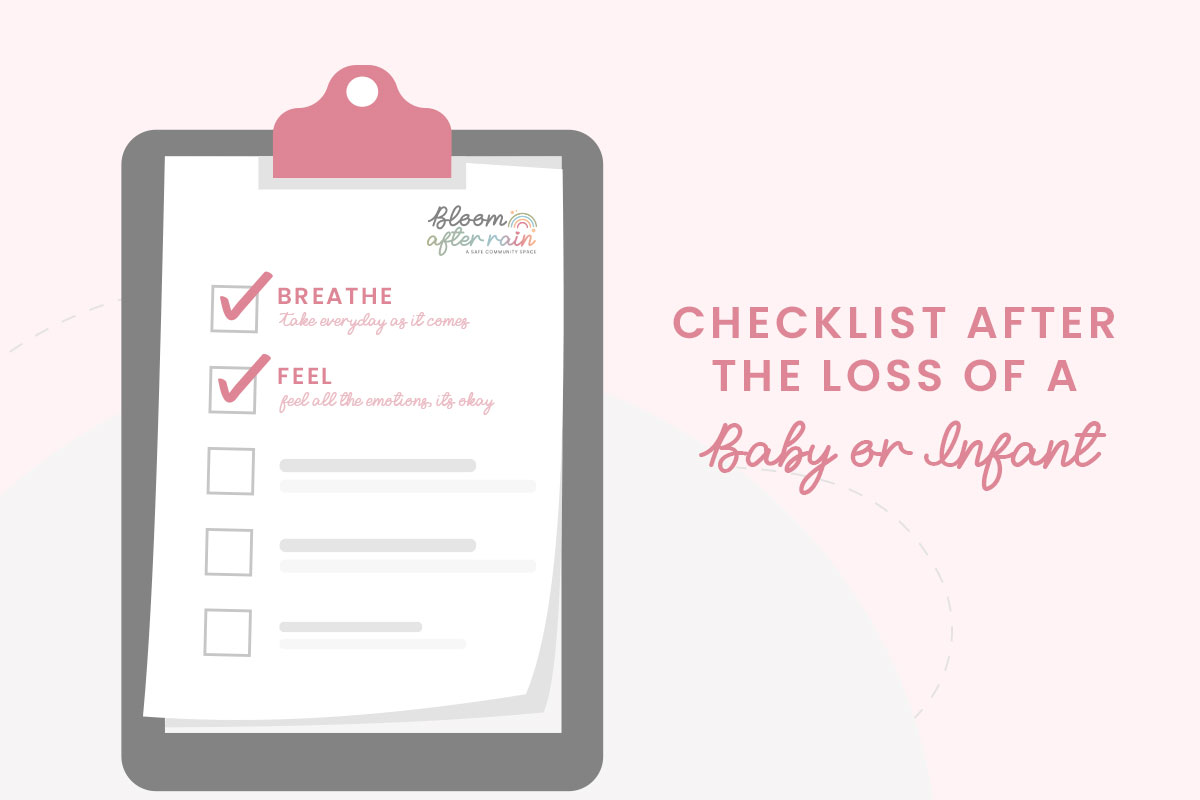
Losing a baby is overwhelming in every possible sense, and in the early days of grief even the smallest decisions can feel completely beyond reach. Your mind is foggy, your body is exhausted, and the idea of having to think about paperwork or phone calls or arrangements while you are still in shock is an enormous ask. This checklist exists to help, whether you are the parent trying to find a place to start, or a family member or friend who wants to step in and carry some of the practical load so that the people grieving don’t have to.
Please read this gently. You do not need to do everything at once. You do not need to do any of it alone. And if something on this list does not feel relevant or right for your situation, you are allowed to set it aside entirely.
In the first hours and first day
The very first thing is simply to make sure that medical care has been completed and that you have been given a discharge summary or medical report from the hospital. Before you leave, ask about memory making options, because in the fog of those early hours it is easy not to think to ask, and these are things you may deeply want later. Hand and footprints, photographs, a blanket or piece of clothing your baby was wrapped in, a lock of hair if applicable, these small and tender keepsakes have a way of becoming irreplaceable. If you are not in a state to ask, please let someone with you ask on your behalf.
It also helps enormously in those early days to nominate one trusted person, a partner, a parent, a close friend, to be the main point of contact for practical arrangements and incoming messages. You should not have to answer your phone repeatedly in those first hours. Someone else can hold that for you.
Medical and insurance notifications
When you are ready, or when someone is able to help you with this, notify your medical aid or health insurance provider and ask what cover is available for hospital care, funeral or cremation costs, and counselling or trauma support. Keep a record of any claim reference numbers, and ask someone organised and trustworthy to manage this paperwork on your behalf if at all possible. Also let your gynaecologist, midwife, or doctor know so that follow-up care can be arranged, and if you have upcoming antenatal appointments in your calendar, ask someone else to cancel or reschedule those for you so you do not have to.
Funeral, burial, and cremation arrangements
There is no rush to make these decisions, and there is no right answer. Some families choose a private burial. Some choose cremation. Some opt for a hospital or group cremation if that is what is available and feels right. Others hold a small memorial without any formal arrangements at all. Whatever you choose, it is enough.
If you do work with a funeral home, they will guide you through the practical steps including the transfer of your baby, the type of service, timing, and location. You can choose to have your baby named in the service, to include readings or music that holds meaning, or to keep things very simple and very private. This farewell belongs entirely to you.
Legal and administrative paperwork
Depending on where you live and how far along the pregnancy was, there may be legal documentation to consider such as a stillbirth certificate or registration, cremation or burial authorisation, or a certificate of remembrance offered by the hospital. Ask your hospital or healthcare provider what applies to your situation, and please ask someone else to keep copies of all documents together in one place so that nothing gets lost during a time when keeping track of things is incredibly difficult.
Work and everyday life
When the time comes, your employer will need to be informed, and you may be entitled to bereavement leave or sick leave depending on your circumstances and where you live. If you are not able to make that call yourself, ask someone to do it for you. Pause or cancel any work meetings, social commitments, pregnancy classes, or bookings that no longer need to happen, and if you have other children at home, arrange childcare support so that you have space to grieve without having to hold everything together at once.
Do not be afraid to ask for practical help with meals, groceries, cleaning, and the ordinary tasks of daily life. People who love you and do not know what to say will often be enormously relieved to be given something concrete to do. Let them.
Emotional support and communication
Identify one or two people who can filter your messages and handle incoming calls so that you are not having to respond to an endless stream of condolences when you have nothing left to give. Decide in your own time whether you want to share the news more widely or keep things private for now, and know that either choice is completely valid and entirely yours to make.
When you are ready, consider reaching out for professional support through a bereavement counsellor, a trauma therapist, or a support community for pregnancy and infant loss. Grief of this magnitude deserves more than just time. It deserves real, informed, compassionate support.
Honouring and remembering your baby
Only ever when you feel ready, and never because you feel you should. You might choose to name your baby if you haven’t already. You might begin a memory box filled with ultrasound images, hospital bracelets, clothing, or cards from the people who loved them too. You might plant something living in their honour, light a candle, write them a letter, or simply hold their memory quietly inside yourself without any outward ritual at all. There is no correct way to remember someone you loved. There is only your way.
There is no timeline for any of these decisions. Grief affects memory, concentration, and the ability to think clearly, and that is completely normal. You are allowed to postpone things. You are allowed to change your mind. You are allowed to say not yet, or not at all, to anything on this list that does not feel right for you.
At Bloom After Rain, we know that practical checklists can feel cold and clinical when your heart is in pieces, and we want you to know that this one was written with enormous gentleness and with deep respect for what you are going through. If you need support navigating any part of this journey, whether practical, emotional, or simply the need to talk to someone who truly understands, we are here. We have been here. And we are not going anywhere.
